
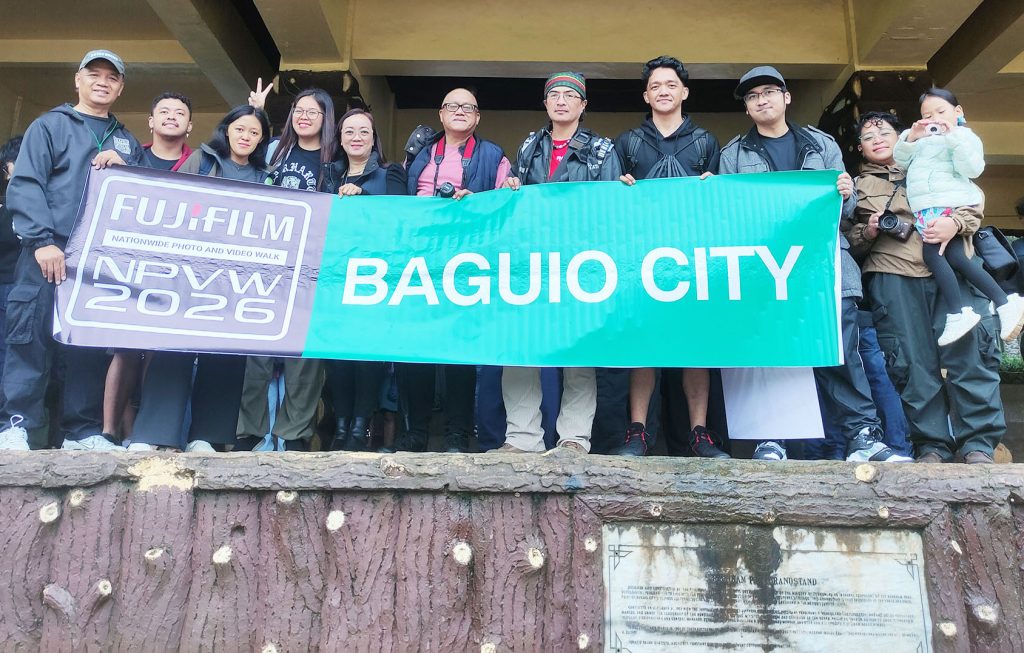
Behind every photo is a community. This is what it looked like when Baguio's photographers came together on August 15, 2026, different backgrounds, same passion. Thank you, Baguio, for showing up and supporting Fujifilm NPVW 2026. The walk was led by Jayson Jaylo, Conrad Rotar, and Jordan Rae Salinas.**Photo by neimless_skills
Baguio authorities called for a more centralized and institutionalized mechanism to address bullying cases in the city amid unconsolidated data, varying approaches, difficulties in sharing information, and questions over the respective authority of schools and barangays.
During the Baguio City Council’s regular session, representatives from the Department of Education (DepEd)-Baguio, Baguio City Police Office (BCPO), and City Social Welfare and Development Office (CSWDO) briefed city officials on the bullying cases recorded by their respective offices.
From January 2025 to July 2026, the BCPO recorded 34 bullying cases reported to police stations. Of these, 16 were referred back to the concerned schools, 10 were referred to the CSWDO, and three were amicably settled among the parties involved. The status of the remaining five cases was not disclosed.
Meanwhile, the CSWDO recorded five bullying cases in 2024, while it had no available records for 2025. This year, the office has received cases referred by the BCPO, although some were classified as physical injury cases instead of bullying.
For DepEd-Baguio, 20 bullying incidents were consolidated through its Legal Services Information System (LSIS) from June 2025 to March 2026, while four additional incidents have been recorded from June 2026 to date. However, Jerry Ymson, Deped-Baguio representative, disclosed that the LSIS has experienced technical glitches, affecting its reliability in gathering and consolidating data on bullying cases.
The figures reflect that records are maintained by the three offices based on their respective mandates, reporting systems, and referral processes. However, the absence of a common and consolidated database makes it difficult to establish a single picture of the extent of bullying cases in the city.
According to PCPT Loreta Tiago, the BCPO has also asked schools to share their bullying data, but some teachers and school personnel were reluctant to do so due to concerns over possible violations of the Data Privacy Act.
Ymson clarified that school personnel had already been oriented that they could provide aggregated figures without disclosing sensitive personal information about the individuals involved.
The agencies also follow different processes in responding to bullying cases. According to Ellen Dayag, representative of the CSWDO, their office follows a referral system in which DepEd and the BCPO initially classify cases based on whether the individuals involved are children at risk or children in conflict with the law before referring them to the CSWDO.
The CSWDO then provides interventions based on its assessment of the case which may include community-based programs, skills training, therapy, and educational programs.
Meanwhile, public schools follow the procedures prescribed under DepEd Order No. 6, Series of 2026 which provides guidelines for addressing bullying and other forms of school-related misconduct.
On the other hand, Liga ng mga Barangay President Rocky Aliping mentioned measures undertaken by barangays to prevent bullying in their respective jurisdictions including the deployment of barangay tanods to different schools in compliance with Executive Order No. 2025-072 and a City Council resolution supporting the same mandate.
Despite existing interventions, the different systems and processes have resulted in gaps in coordination, particularly in data sharing and the referral and handling of cases involving multiple agencies.
To address these gaps, Dayag suggested establishing a more streamlined city-wide referral system for bullying cases to ensure that cases are properly documented, directed to the appropriate agencies, and monitored through the intervention process.
Ymson also cited an incident involving students in a mobbing that resulted in physical injury outside the school premises. He said the barangay referred the matter to the concerned school, but the school could only provide counseling and alternative learning interventions to the students in accordance with Republic Act No. 10627, or the Anti-Bullying Act of 2013.
According to Ymson, the investigation and further action in such cases should be undertaken by the barangay pursuant to Ordinance No. 59-2017, the city’s anti-bullying ordinance.
Ymson emphasized the need to clarify the respective roles of schools and barangays when bullying-related incidents occur outside school premises or require intervention from multiple authorities.
He added that addressing bullying requires a whole-of-society approach, with responsibility shared across the community and stronger collaboration among school personnel, the police, and the local government.
In view of the concerns raised, city officials and the participating agencies agreed to consider the establishment of a centralized and institutionalized mechanism for documenting, referring, and addressing bullying cases in Baguio through the Local Council for the Protection of Children (LCPC).
The Baguio City Council referred the matter to the Committee on Public Protection and Safety, Peace and Order, and Human Rights and Justice for further study and possible future legislative action.
The city’s legislative department will also look into the provisions and implementation of Ordinance No. 59-2017 in relation to the issues raised during the discussion. **Jordan G. Habbiling