
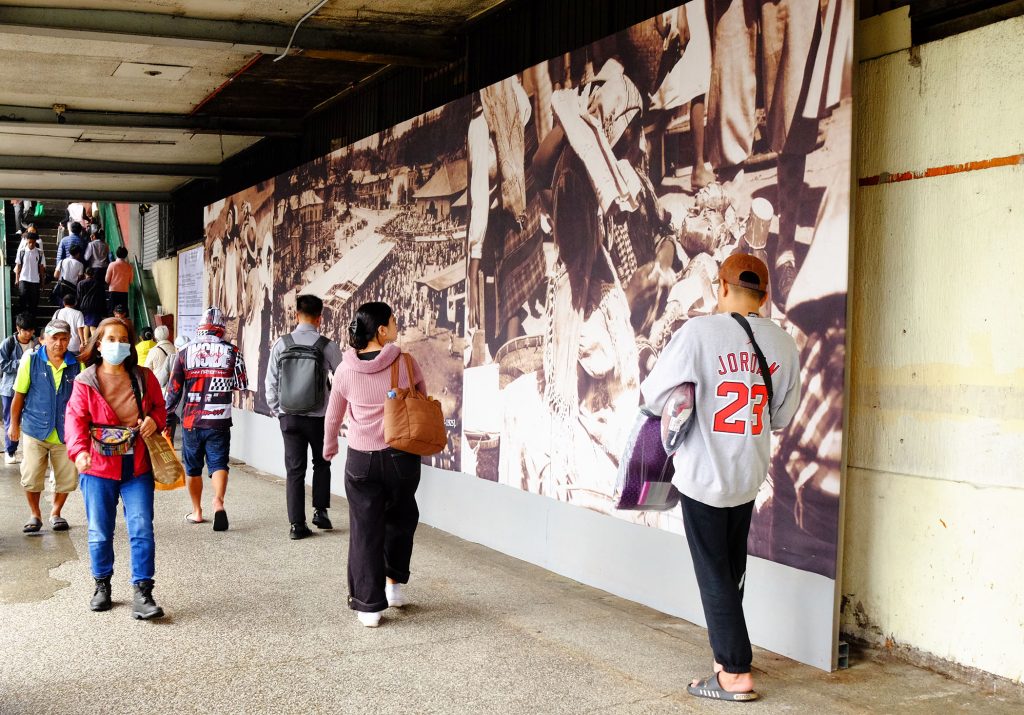
The facade of the Maharlika Livelihood Center in Baguio City was decorated with enormous blown-up historical photographs. As part of Baguio's 117th Charter Anniversary celebrations, the installation was created and carried out by the City Buildings and Architecture Office and CBCC architect Carlo Munar. **Photo by neimless_skills
The city’s “Pansa-nopen Tayo” circular economy (CE) program has recorded several accomplishments aimed at reducing waste, promoting resource recovery and creating livelihood opportunities through sustainable practices.
According to EU-PH Green Economy Partnership (EU-GEP) and the United Nations Development Programme (UNDP) Local Government Unit and Stakeholder Engagement Specialist Dr. Marjorie Balay-as, among the key milestones is the integration of 65 informal waste workers into the city government workforce, along with livelihood support for persons with disability through innovation grants.
The program has also started mainstreaming circular economy principles into the city’s plans and budgets, including the 2026 Annual Investment Program and preparations for CE budget tagging in the 2027 AIP.
At the barangay level, pilot areas are implementing materials recovery and segregation-at-source initiatives. Recyclable waste diversion has reached more than 700 tons based on monitoring systems while participating barangays have diverted more than 42 tons of recyclables. Around 20 tons of plastic have also been processed into chairs.
The program has also diverted more than 50 tons of food waste through the Black Soldier Fly facility.
Other accomplishments include the development of CE policies at the city and barangay levels, partnerships with the private sector and initiatives supporting sustainable tourism, education and business development.
The Happy Hallow Heritage Coffee Project, for instance, has developed into a micro-enterprise generating around P30,000 in monthly income.
The program has also provided equipment and grants for community, behavioral change and innovation projects, while continuing training and business development activities for CE enterprises.
Education and behavior-change efforts include partnerships with the Department of Education, private schools and universities, incubation of school-based CE projects, CE fellows, and the development of the Pansa-nopen Tayo Resource Book.
Monthly barangay learning sessions, benchmarking visits and data tracking are also being undertaken to strengthen knowledge-sharing and monitoring of CE initiatives.
The program’s continuing priorities include strengthening materials recovery facilities, sustaining the implementation of materials recovery and extended producer responsibility programs, developing CE financing opportunities, and expanding CE education.
Upcoming activities include additional barangay learning sessions, training for BSF technicians, textile waste workshops, CE financing assessments, an investors’ summit, an Extended Producer Responsibility (EPR) forum and training of teachers on circular economy. ** Aileen P. Refuerzo