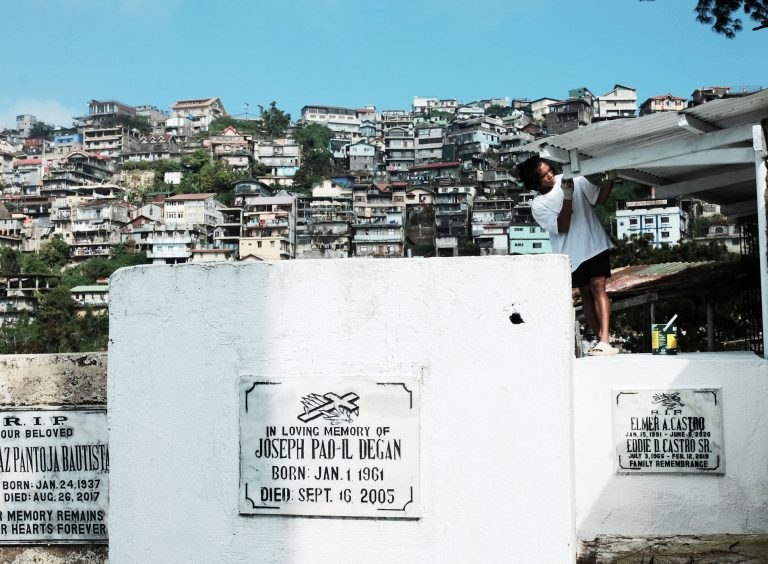
(PIA) — Growing up in a village in Lubuagan, Kalinga, in the early 2000’s, children knew the arrival of Undas and other holidays not by the calendar, but by the sudden halt of daily activities.
This was called ngilin—a sacred pause rooted in respect, caution, and collective responsibility. A time when even the most ordinary activities were forbidden out of respect for the dead and the spirits believed to roam among the living.
When these days came, parents would strictly prohibit the children from wandering around the neighborhood, playing outdoors, most especially hiking to the mountains and swimming in nearby streams. They warned that spirits were now roaming around and might nudge or call on the children and they could get sick or ill.
There was a boy who developed a high fever after wandering around the village during the sacred day. His parents had called a man-aalisig, or shaman, to check the exact cause of his affliction. After the man-aalisig passed the sacrificed chicken over his body and dabbed a little blood on his forehead, he told him he had been reprimanded by a spirit for being too rowdy. As children, nothing terrified more than the mention of a spirit, so they stayed home.
Even adults would not dare travel, go into the forest to fetch firewood, or tend to their uma or swidden farms because any harm that would befall them when they insisted would be deemed entirely their own doing, and the community would rather blame them for their misfortune. They would say, jipun siya lan-ngilin (he didn’t observe the ngilin), followed by backhanded comments like amod siya pangog la, roughly suggesting that the misfortune served the person right for being too hardworking.
In some instances which led to death, the reference to the failure to observe ngilin remained in the stories of villagers when recounting the tragedy. So, for the villagers, there was no more shameful thing than not adhering to the taboo.
The atmosphere in the village during the holiday, locally called egew ja latoy (day of the dead), was somber where the absence of activity reflects a collective state of grief or remembrance of the members of the community who had passed away.
To welcome their deceased loved ones, families in the village prepare ilanchila, a traditional sticky rice cake. They then served bowls of ilanchila generously slathered with ladek inside the house where their departed loved ones normally sit or sleep, or at the balcony where the spirit can have easy access for the food. This practice is called atang, a sacred offering to the dead or spirits.
Some families also hung the rice cakes, still wrapped in takong leaves, in a line along their balconies, which, to many, remains a puzzle up to now as to its purpose.
One thing, however, was clear: the food offered to the dead was not to be touched or eaten by the living.
An elder once told a story about someone who had tried to eat the atang. According to his account, while the person was eating it, his tongue suddenly extended to its limit and only when a man-aalisig intervened did it go back to normal. To think of it now, of course, sounds like a myth or an exaggeration for some, but who knows?
Stories like these were part of how residents came to understand ngilin as children, shaping their sense of what was forbidden and why the holiday had to be observed with care.
Over the years, however, the way the village observes the tradition has gradually changed.
Today, though the village still observes ngilin during Undas by abstaining from their work, the atmosphere has changed; it has become less restricted.
People can now spend the days going for picnics by the river or traveling to resorts outside the community, and families reuniting over picnics by the tombs of their loved ones. **JDP/RGA-PIA CAR