
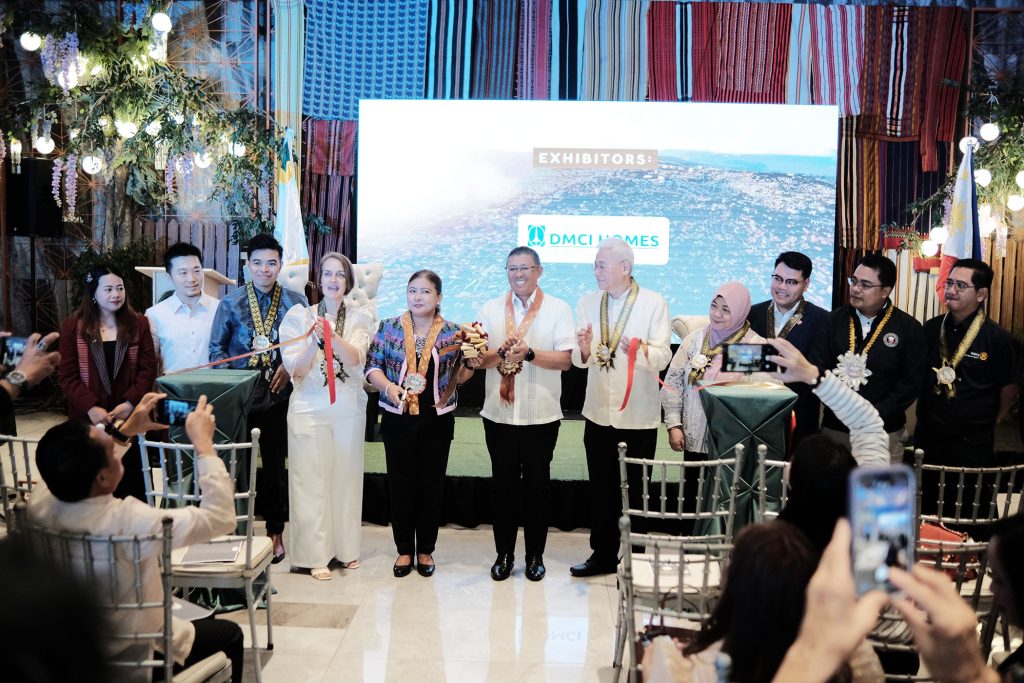
The DOT–CAR and Up North Business Club wellness event at the Newtown Convention Center, Baguio City. The event put the spotlight on integrative medicine, holistic healing, and the "Filipino Brand of Wellness" of Northern Luzon. It ran from November 3 to 5, 2026. **Photo by neimless_skills
Baguio City won second place in the 5th City Net Sustainable Development Goals (SDG) Awards with its entry, the “Pansa-nopen Tayo” circular economy initiative in the Breakthrough Innovation Category of the awards program held Nov. 4, 2026 in Jakarta, Indonesia.
The city took the second honor from a pool of seven finalists in the awards program which for the first time allowed global entries outside of Asia and the Pacific for three of its seven core thematic categories.
Hongkong copped the first prize and Penang Island in Malaysia landed third.
City General Services Officer Ma. Guadalupe Della presented the city’s entry and received the award on behalf of the city government. The top winners received trophies, mentorship opportunities and sponsored attendance to the upcoming 10th CityNet Congress.
The CityNet SDG City Awards gives recognition to innovative urban practices of local governments to address urban challenges and advance the SDGs across Asia-Pacific.
This is Baguio’s second time to win second place in the said awards program.
During the 3rd CityNet United Nations Economic and Social Commission for Asia and the Pacific (UNESCAP) SDG City Awards held in Iloilo City on Nov. 19, 2024, the city placed second via its innovative urban program entitled “Mapping Urban Resilience: A Digital Twin to Baguio’s Livability Index.”
The city was cited for pioneering the use of digital technology to enhance urban planning and resilience.
For this year’s awards program, the city showcased its culturally grounded circular economy initiative, Pansa-nopen Tayo, as its entry in the Breakthrough Innovation Category of the Sustainable Development Goals (SDG) Awards.
In her presentation, Della said the Pansa-nopen Tayo initiative showcases “how cultural values can drive sustainable development through a community-based circular economy program.”
She said it is anchored on the Ibaloy value of “sa-nop,” or frugality and avoiding waste and promotes responsible consumption and resource recovery while targeting an 80-percent reduction in projected waste by 2032. Institutionalized through a city ordinance, it mobilizes all 128 barangays, with each allocating at least one percent of its annual budget to circular economy initiatives.
The program advances eight Sustainable Development Goals (SDGs) through interconnected actions: promoting food security through composting and local food systems (SDG 2); improving public health by reducing pollution (SDG 3); integrating circular economy education in schools (SDG 4); generating green jobs and livelihood opportunities for waste workers and small businesses (SDG 8); building sustainable communities (SDG 11); promoting responsible consumption and production through waste segregation, recycling, and producer responsibility (SDG 12); reducing greenhouse gas emissions through waste diversion (SDG 13); and strengthening partnerships among government, communities, businesses, schools, and development organizations (SDG 17).
Its initiatives include barangay-led waste recovery, food waste processing through black soldier fly facilities, composting, plastic upcycling into school chairs, and reuse and donation programs. By involving informal waste workers, indigenous peoples, women, youth, senior citizens and persons with disabilities, Pansa-nopen Tayo ensures that the benefits of the circular economy are shared across sectors. ** Aileen P. Refuerzo