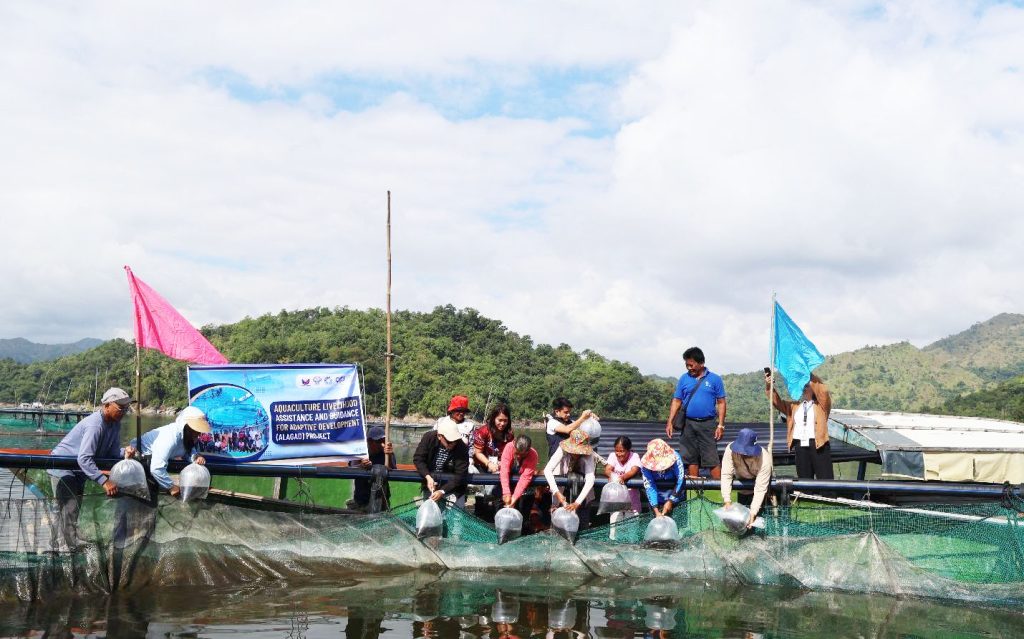
Alfonso Lista, Ifugao – The challenges brought about by El Niño may have tested the resilience of communities dependent on fisheries and aquaculture, but they have not dampened the determination of the women of the Riverside Rural Improvement Club (RRIC) of Barangay Namnama, Alfonso Lista, Ifugao, to pursue opportunities for a better and more sustainable livelihood.
Rather than allow uncertainties to discourage them, these women have embraced the challenge of venturing into aquaculture, demonstrating that resilience is not simply about overcoming adversity but also about having the courage to explore new opportunities and take charge of their future.
On November 16, 2026, the Bureau of Fisheries and Aquatic Resources – Cordillera Administrative Region (BFAR-CAR), led by Regional Director Nazario C. Briguera, turned over a P2-million livelihood assistance package under the Aquaculture Livelihood Assistance and Guidance for Adaptive Development (ALAGAD) Project to RRIC. The project package includes a 10-meter-diameter High-Density Polyethylene (HDPE) fish cage established at the Magat Dam Aquaculture Park Area, 30,000 tilapia fingerlings, fish feeds, and other aquaculture inputs for two cropping periods to help the organization establish its aquaculture livelihood enterprise.
For the women of RRIC, the project is more than just livelihood assistance. It is an opportunity to learn, venture into a new undertaking, and demonstrate their capacity to become active partners in community development. Their willingness to take on the challenge reflects their determination to make the most of opportunities despite the uncertainties brought about by changing climate conditions.
“Livelihood assistance becomes meaningful when it empowers people to take charge of their own development. Through the ALAGAD Project, we are not only providing resources but also creating opportunities for our fisherfolk, especially women, to explore new livelihood possibilities, develop their capabilities, and build more resilient communities. The challenges brought about by climate change should not deter us from moving forward; rather, they should inspire us to adapt, innovate, and work together toward sustainable development,” BFAR-CAR RD Briguera said.
Through ALAGAD, BFAR-CAR seeks to expand livelihood opportunities for organized fisherfolk, particularly by promoting aquaculture as an alternative source of income. The initiative also aims to diversify livelihood options while helping reduce fishing pressure on wild fish stocks, contributing to the sustainable management of the region’s aquatic resources. The RRIC is one of two organizations in the Cordillera Administrative Region selected to receive the ALAGAD Project, underscoring BFAR-CAR’s commitment to strengthening community-based aquaculture and supporting organized fisherfolk as partners in sustainable fisheries development.
The women of RRIC embody a valuable lesson in resilience: challenges need not become barriers to development. With determination, openness to learning, and the right partnerships, even uncertain circumstances can become opportunities to grow. Through the ALAGAD Project, BFAR-CAR hopes to see these women not only succeed in their new aquaculture venture but also inspire other communities in the Cordillera to embrace innovation, strengthen their livelihoods, and take an active role in building a more resilient fisheries sector.**