Dear Councilor,
I hope this letter finds you well.
I am writing to express my concern and misgivings about the planned major redevelopment of the Baguio City Market.
I am a Baguio resident and consumer and also a business owner in the hospitality industry.
The planned redevelopment of the city’s public market will be a major disruption to the economic lifeblood of the vendors and everyone else in the market’s supply chain. Relocation to the out-of-the-way slaughterhouse site for the duration of 2-4 years of construction (and still with space rent to pay) will cause long-term economic insecurity and potential sales losses for the vendors, suppliers, and their families. For us, consumers, the majority of whom are commuters and wage earners, the inaccessibility of the relocated market area will be a major inconvenience and will mean additional transportation expense. Ordinary people are already burdened with economic woes resulting from state corruption and neglect. Let us not add to our people’s misery.
Building a mall that’s got it all near small local businesses will pose stiff competition to the latter. As we know, malls carry known chain stores both local and foreign, determine their own tenant mix, boosted by their own advertising, marketing and merchandising. Malls also have their own anchor stores such as supermarkets with both wet and dry goods section, hardware, pharmacies, their own department stores carrying local and imported accessories, kitchen ware, household goods, among others. No one but no one could dictate to the mall management what their tenant mix should be. Putting these in close proximity to small local businesses carrying the same or similar goods will assuredly pose an unequal playing field, as a big box mall could potentially lead to less foot traffic, and depressed sales, and store closures for small market retailers (competition happens also among malls close to each other with the top-of mind, better mall winning consumers’ patronage). This is not inclusive economic growth. Yes, malls create jobs, but these are mostly contractual. If we want a strong, resilient local economy, let us support homegrown businesses and create more opportunities for the growth of local entrepreneurship.
Constructing a mall with a multi storey parking building with the public market as a mere appendage is incongruent to the local government’s avowed pursuit of the Sustainable Development Goals particularly pertaining to climate action. It is also not compatible with sustainability goals that we usually talk about during public consultations and city summits (more parks, less concrete, water conservation, promotion of public transport and clean air, reduction of waste vs. consumerism).
Have we made and thoroughly studied the environmental impact of such a capital-intensive project, in terms of energy use, water use (considering that Baguio’s water supply is close to depletion), waste generation and disposal (as we struggle with waste reduction), from construction to operations?
Have we considered how building another giant grey structure in the central business district will further contribute to the heat island effect as surface and air temperature are increased by more glass and concrete, while we talk about climate adaptation and mitigation?
I understand that the mall developer will derive a huge bulk of its return on investments (ROI) from parking fees. Can we imagine the volume of carbon-spewing vehicles this will attract to the city center that will adversely affect air quality? The traffic gridlock this will create? Don’t we have enough of these? We must be masochists if we allow this to happen.
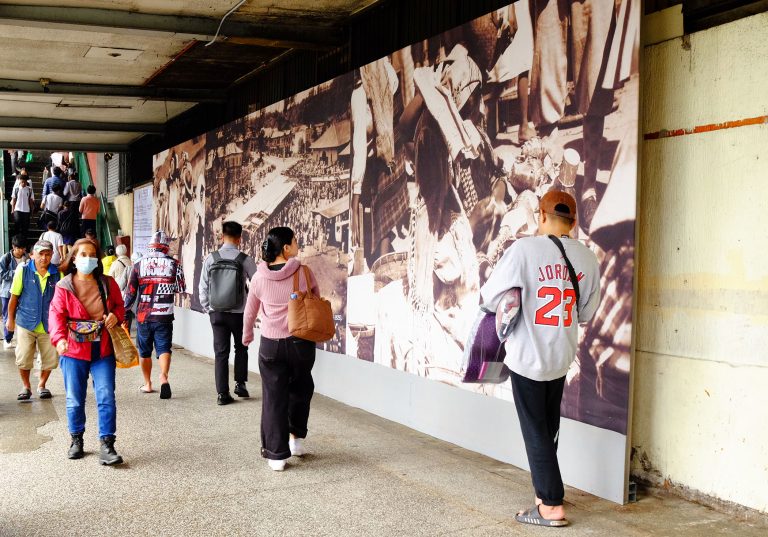
Lastly, let us not overlook the historical significance and the cultural value of the Baguio Public Market. Over the years, it has been visited by millions of locals and foreigners alike, drawn to its unique history, character, produce, haggling and suki system, even the business and interpersonal relations established with its vendors. It has provided sustenance to the Cordillera indigenous communities, and to lowland migrants alike for over a century now. When travelers talk about a notable “world-class” market, they do not normally refer to malls. They talk about their unforgettable experiences and purchases from historic, revitalized public markets such as Camden Market in the UK, La Boqueria in Spain, Granville Market in Canada, the floating markets in Thailand, bazaar in Turkey and many other examples.
Our historic public market with its unique history and character, could be transformed, branded and promoted, as a vital component of our creative city status.
Let us opt for a market revitalization that is inclusive of local stakeholders—market vendors, consumers, business groups and our LGU—from planning, execution, to its operation. Let us have a market development with a low carbon footprint that even future generations will appreciate, even after we are gone, 50 years and beyond.
Thank you.
Sincerely yours,
Lingling Maranan-Claver