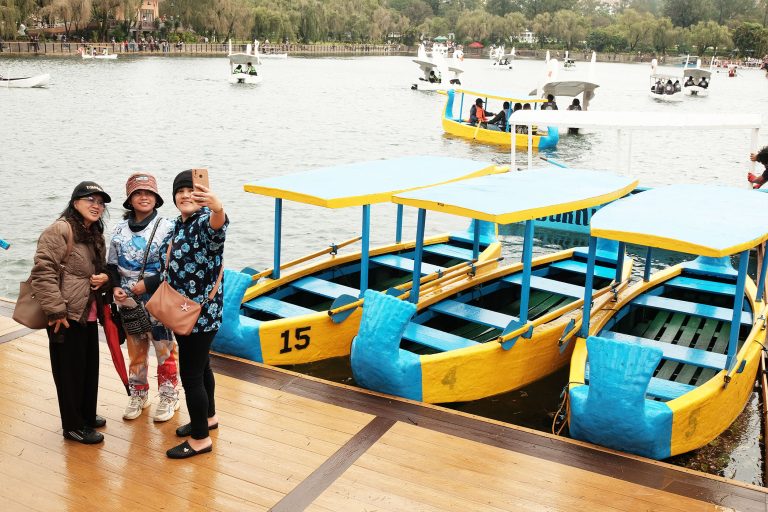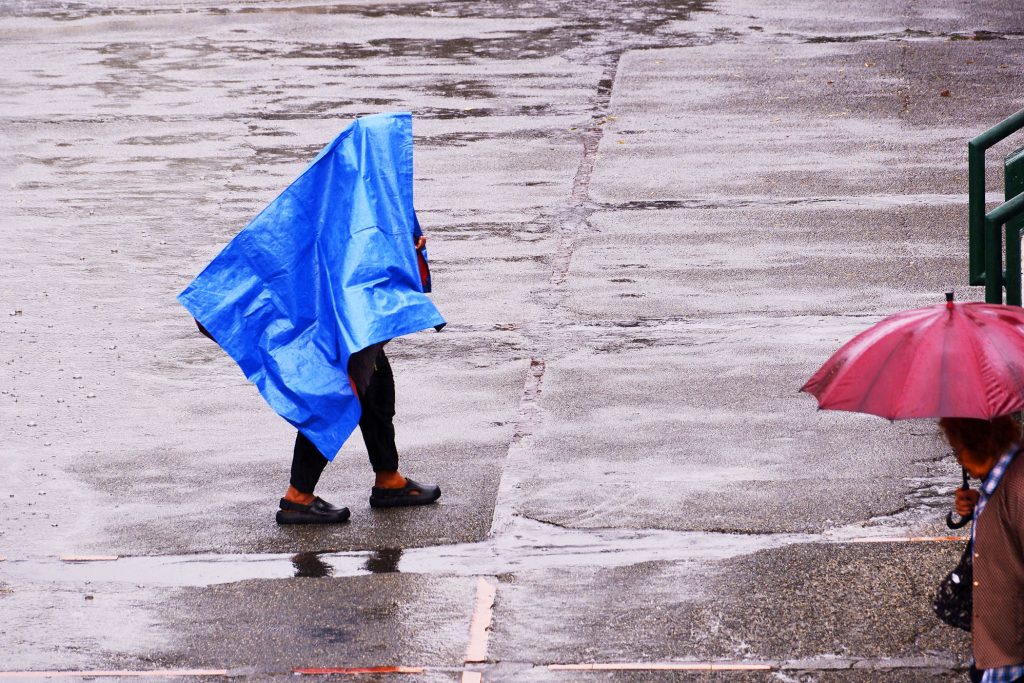
On May 30, 2026, PAGASA reported the beginning of the Southwest Monsoon (HABAGAT). Rains and thunderstorms are likely to become regular as the Habagat weather system gains strength, particularly around Baguio City. **Photo by neimless_skills
Strained beyond capacity
The delay in pursuing a long-term solution to the outdated sewerage treatment plant (STP) and critically overwhelmed sewer network has heightened risks of water pollution, foul odors, and public health hazards amid efforts of the city government to secure national funding for the rehabilitation project.
Operating since 1986, the facility was designed to treat 8,600 cubic meters of wastewater per day (m³/day), but its current inflow has already surpassed this capacity due to increasing wastewater generation over the years. Compounding this issue, damaged sewer lines have resulted in leakage that further contaminates surrounding areas, aggravating the city’s environmental challenges.
A 2019 data from Environmental Management Bureau-Cordillera (EMB-CAR) showed that the fecal coliform levels of Balili River and Bued River are worse than that of Manila Bay. This contamination is attributed to multiple sources including untreated domestic wastewater, leaking sewer and septic systems, and the limited treatment capacity of existing sanitation infrastructure.
To address this long-standing problem which remains one of the city’s top environmental concerns, the local government is planning to construct a new STP including the upgrading and rehabilitation of the sewerage network leading to the Balili Catchment Area. The request for the initial funding of the project, amounting to P500 million, has already been submitted to the Tourism Infrastructure and Enterprise Zone Authority (TIEZA). The entire project is expected to cost more than P1 billion.
This high value rehabilitation project is designed to meet demand by year 2035 and comply with stricter environmental requirements.
Currently, only about 10,415 households are connected to the Balili STP. With the completion of the rehabilitation project, the city government aims to increase this number to 35,991 households by 2035, in anticipation of the city’s population reaching approximately 460,000 by that time, including residents, transient occupants, tourists, and same-day visitors.
At present, there are no plans yet to establish sewerage networks in other catchment areas such as Ambalanga, Bued, and Asin-Gallano due to the lack of suitable sites for the construction of additional STPs. As an interim measure, households within these areas are encouraged to construct communal STPs or maintain septic tanks, the contents of which will be periodically desludged and transported to the Balili Catchment STP for treatment.
Currently, the city is awaiting a favorable response from the TIEZA regarding its request for funding assistance for the project.
It can be recalled that the city’s original proposal to rehabilitate the outdated STP, with a total cost of USD 46.99 million, was delisted from the project pipeline of the Department of Economy, Planning, and Development (DepDev) due primarily to missed submission deadlines.
As the local government grapples with financial challenges for this project, the city risks non-compliance with DENR Administrative Order 2016-08 (Water Quality Guidelines and General Effluent Standards of 2016) issued under the Philippine Clean Water Act (RA 9275).
Failure to comply with these standards exposes the city to hefty fines ranging from P10,000.00 per day (P3.65 million annually) to as much as P200,000.00 per day (P73 million annually) depending on the severity of violations which could drain the city’s coffers and divert funds away from other essential services.
At present, the city’s avoidance of fines for failing to meet sanitation standards remains dependent on temporary and stopgap measures while it awaits the implementation of the rehabilitation project.
According to Atty./Engr. Lowell Barton Jr. of EMB-CAR during a forum with the Baguio City Council on June 1, 2026, the city risks being issued a cease-and-desist order by the DENR if it fails the sampling test in June.
As the local government moves forward with the proposed project, the city executives also plan to implement a systematic collection of sanitation fees to help sustain the operation and maintenance of the new facility. The sanitation fees will primarily be based on wastewater generation.
Under the proposal, the sanitation fee system introduces a four-tier classification covering users based on their connection to the Baguio Water District (BWD) and the city sewer line, with corresponding billing schemes and desludging requirements.
Under Categories A and B, users are billed through the BWD water system. Category A applies to those connected to both the BWD water system and the city sewer line, while Category B covers those connected to BWD only. Residential users under both categories are charged 16% of their monthly water bill, while commercial, industrial, institutional, and government users are charged 18%. These fees are collected together with the monthly BWD water bill and are subject to caps of up to 40% for residential accounts and up to 45% for commercial and government users.
Category C covers establishments connected to the city sewer line but not to the BWD system where fixed monthly fees apply depending on classification. Residential and condominium units are charged P100.00, Commercial Tier 1 establishments are charged P250.00, Commercial Tier 2 (lower) at P850.00, Commercial Tier 2 (upper) at P2,200.00, and government offices at P100.00. Payments are made directly to the City Treasury Office and may be settled on a monthly, quarterly, or annual basis.
Category D applies to users not connected to either the BWD water system or the city sewer line. Property owners under this classification are required to maintain functional septic tanks or approved wastewater treatment systems. Desludging services shall be provided exclusively by the City or by City-accredited Mobile Service Providers, with payments made directly to the provider or the City based on approved desludging rates. Residential and commercial establishments are required to undergo desludging at least once every four years, while government facilities shall avail of the service as needed or upon request using City-owned trucks or authorized service providers. Dislodging fees are based on volume of septage which is pegged at P1,000.00 per cubic meter.
Facilities operating their own wastewater treatment systems may be exempted from the fee, provided they comply with environmental standards.
Without decisive intervention and source of funds for the project, the city risks not only regulatory penalties and service disruptions but also long-term environmental degradation that could undermine public health, urban livability, and future development. **Jordan G. Habbiling