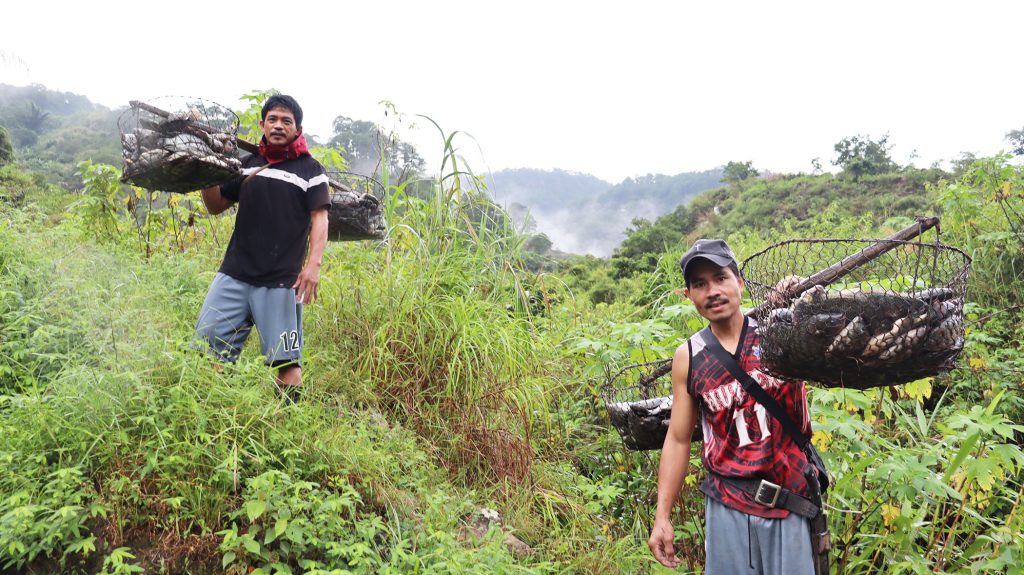
SAAD beneficiaries from Sabangan, Mountain Province utilizing the Gimata to transport their harvested tilapia to flat ground for the transfer of their produce for marketing.**
In the Cordilleras, farmers and fisherfolk use diverse indigenous farming and fishing tools, equipment, and accessories, showcasing their ingenuity and traditional knowledge. At first glance, these items may seem like simple, everyday objects, but they carry deep significance, embodying the history and way of life of the iCordilleras.
The Gimata, for instance, is a traditional indigenous basket meticulously crafted and woven from rattan, bamboo, or wire. This has been a long-ago practice in Mountain Province particularly the Kankanaeys who are involved in farming and hunting as their primary sources of livelihood. The Kankanaeys mostly used the gimata as an efficient way to carry their goods, as their bare hands could only hold so much. They cleverly crafted this basket to carry and transport heavy loads of their produce such as rice, other crops, and goods for the household as they cannot mechanically transport goods in the sloping terrains. Known for its artistic design and durability, the basket reflects the craftsmanship of the hands that made it – hands that balance artistry, functionality, and resiliency.
The Gimata is more than just a tool—it connects the past and the present. Many years have passed, but until today, this basket remains indispensable, especially in rural farming and fishing communities. This indigenous basket maintains its role even in the fisheries sector, particularly during the harvest of fish stocks in the aquaculture projects under the Special Area for Agricultural Development (SAAD) Program. It is often seen as a constant fisherfolk companion, transporting fishery inputs and other supplies, and witnessing the bountiful harvest from various fish farming activities.
Mr. Reynante Briones, a SAAD beneficiary from the Ug-ugbo Farmers and Irrigators Association in Sabangan, Mountain Province, calls the gimata his trusted partner. “My pond is in the mountain, and carrying my tilapia harvest for marketing is tough. With the use of two gimata connected by a wooden plank, I can balance the load on my shoulder, making it easier for me to bring my tilapia harvest to the community,” he shares.
In conclusion, while the Gimata was originally designed for agricultural activities, it also plays a significant role in the region’s fishery sector. To this day, the tradition of using the Gimata is still practiced by the people of Mountain Province. **