The forests of Apayao may still be keeping some of their secrets.
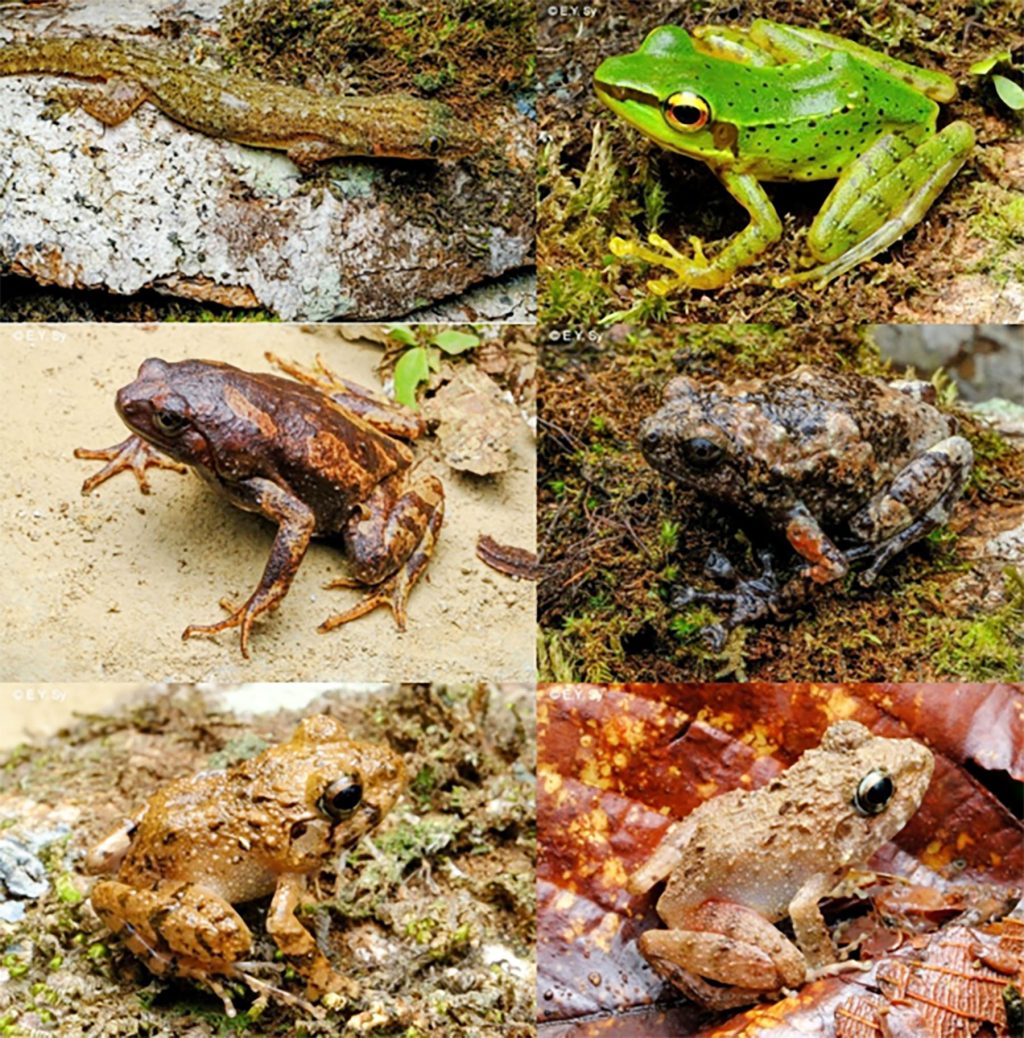
A collaborative scientific herpetofaunal survey in Calanasan from August 13 to 19 documented at least 15 species of amphibians and reptiles, including three specimens whose physical characteristics may represent species previously unknown to science.
The finding remains preliminary. The specimens will undergo further taxonomic examination and confirmation by specialists before their identities can be established. Still, their discovery offers a glimpse into the biological richness that remains to be fully documented in Apayao’s forests.
The survey was conducted by the University of Santo Tomas–Herpetological Research Collection (UST-HRC) and Kyoto University, in partnership with the Philippine Eagle Foundation (PEF) and the Community Environment and Natural Resources Office Calanasan, with the participation of Philippine herpetology experts Dr. Arvin Diesmos and Mr. Emerson Sy.
The research team explored selected forest habitats in Calanasan, documenting snakes, geckos, skinks, frogs, and other amphibians and reptiles. The records add to the growing body of scientific information on the province’s wildlife and provide valuable baseline data for understanding its forest ecosystems.
The three specimens considered potential new species are particularly significant. If subsequent taxonomic studies confirm their distinctiveness, they could represent species not previously described by science, further expanding the known biological diversity of the Philippines.
But beyond the possibility of discovering species new to science, the survey highlights a more fundamental reality: there is still much to learn about the forests of Apayao.
For CENRO Calanasan OIC-CENR Officer Dorothy Joy C. Cayaba, continued biodiversity research is essential to strengthening conservation efforts.
“The documentation of at least 15 herpetofaunal species, including specimens that may potentially be new to science, demonstrates how much more there is to discover in our forests. More importantly, these findings remind us that biodiversity research must go hand in hand with habitat protection.”
Scientific documentation provides the information needed to identify what lives within an ecosystem, understand how species are distributed, and establish the baseline necessary for conservation planning and habitat management. In places where species remain undocumented, their ecological significance and conservation needs may also remain unseen.
The survey was conducted with the permission and support of the Provincial Local Government Unit of Apayao and the Local Government Unit of Calanasan, reflecting the province’s continuing efforts to strengthen partnerships for biodiversity research and conservation.
The research team also utilized the recently inaugurated yApayaos Biosphere Reserve Research Center as a research and coordination facility during the field activity. The Center serves as a platform for researchers, conservation practitioners, and partner institutions conducting biodiversity studies within the yApayaos Biosphere Reserve, supporting scientific collaboration and knowledge generation.
The activity contributes to the continuing documentation of biodiversity within the Apayao Lowland Forest Key Biodiversity Area (KBA) and the wider yApayaos Biosphere Reserve.
For Apayao, every documented species adds another piece to the understanding of its forests. A specimen that may eventually be recognized as a species new to science adds an even more compelling piece: evidence that these ecosystems continue to hold biological stories yet to be told.
And that makes continued exploration more than an academic pursuit. The more scientists learn about what lives in these forests, the better equipped conservation partners are to understand what needs to be protected.
The participating institutions and experts remain committed to continuing collaborative biodiversity research in Apayao, with succeeding surveys expected to expand the province’s species inventory and strengthen the scientific foundation for the long-term protection of its globally significant ecosystems.**