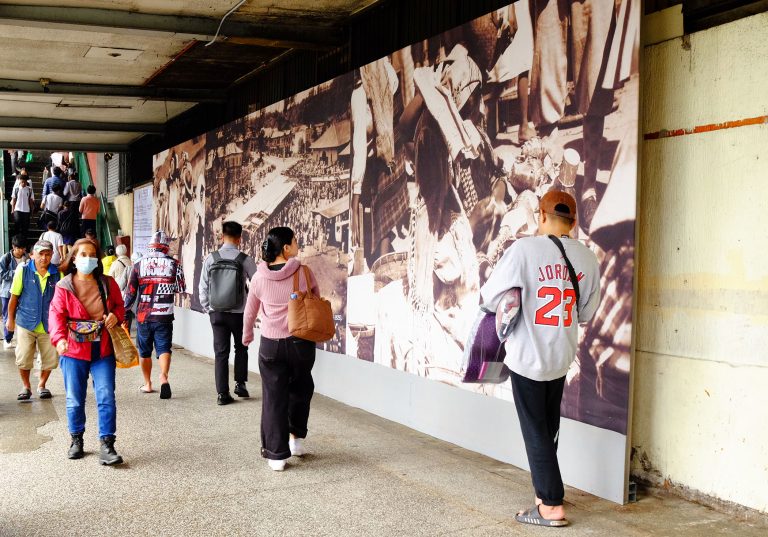
The Baguio City Council has reopened discussion on the proposed environmental user’s fee (EUF) for tourists in light of suggestions that the collections could be used to help rehabilitate the city’s aging sewerage treatment plant (STP) which has long struggled to cope with the demands of a growing population and influx of visitors.
Under the proposed EUF Ordinance, a standard rate of P150.00 per person valid for up to five days will be collected from non-resident visitors who enter Baguio City for leisure or tourism, with discount rates granted to seniors, students, and PWDs (P100.00), residents of La Trinidad, Itogon, Sablan, Tuba, Tublay (BLISTT) residents (P75.00); pre-registration (10% discount); and free entrance for children below six years old.
All tourists must register via the Baguio Visitor Management System (through website, app, kiosks, or entry points). This system will establish accurate tourist statistics such as number of visitors and length of stay.
To ensure efficiency and accessibility, the proposed ordinance outlines multiple collection schemes for the EUF. Visitors and tourists may pay through: an online payment system via the City Tourism Website or mobile application; registration and collection booths upon arrival in the city, designated by the City Treasury Office in coordination with the City Tourism Office; collection booths at identified tourist destinations such as Botanical Garden, Arboretum, Dominican Hill, Mines View Park, and Wright Park/Mansion House; cashier or payment booths of accommodation establishments (AEs); online booking platforms of AEs; and travel agencies and MICE organizers.
Initially, the proposed EUF aimed to fund the protection and management of the city’s natural environment and tourist sites. It has since been redirected to cover expenses and loan repayments for the proposed STP rehabilitation project, together with the proposed sanitation fee which will be computed based on water generation costs and collected through water connections.
During its regular session on September 8, 2025, the city council deliberated the proposed ordinance, raising questions on its legal basis, scope of coverage, fund management, and the reasonableness of the fees to be imposed.
Councilor Betty Lourdes Tabanda pointed out inconsistencies in the provisions of the proposal, stressing the need for a corrected or amended version to reconcile discrepancies and ensure clarity.
Councilor Edison Bilog questioned how the city government will ensure that EUF payments are remitted, especially by transient houses or short-term stays. He warned that some operators might pocket fees instead of remitting. City Environment and Parks Management Officer Rhenan Diwas admitted that monitoring is a challenge, though the City Tourism Office maintains a registry of transients and accommodation establishments.
The ordinance will also require hotels, inns, and lodging houses to pay annual environmental fees based on the number of rooms (P1,000.00 to P20,000.00). Councilor Paolo Salvosa questioned this, arguing that it is not proportional to the environmental impact since bigger establishments obviously consume more water and resources. He suggested imposing a graduated fee like imposing an added fee of P300.00 per room beyond 50 rooms.
Likewise, Councilor Joel Alangsab flagged the abrupt jump from P10,000.00 for 50 rooms to P20,000.00 for 51 rooms and above. He noted that this favors big hotels with over a hundred rooms but still pays only P20,000.00.
Vice Mayor Faustino Olowan suggested solely imposing EUF on tourists to minimize resistance from local businesses. He argued that with 1.3 million tourists annually, even a fee of P150.00 for each visitor is already substantial.
Meanwhile, Councilor Peter Fianza raised crucial points on the legal classification and validity of the proposed EUF, asking whether it should be considered a tax, a charge, or a regulatory fee. He explained that while taxes may be imposed for revenue subject to limits of reasonableness, charges are collected in exchange for services, and fees must be strictly tied to regulation.
If the EUF is treated as a fee, Fianza cautioned that the ordinance must clearly identify the specific regulation it enforces to withstand legal scrutiny. He cited the Laguna Lake Development Authority’s environmental fee which was upheld because it regulated resource use and reduced water pollution. He noted successful models such as Panglao’s P71 million in collections since 2019 and El Nido’s eco-tourism fee. However, he also warned of pitfalls, citing the Supreme Court’s decision in Ferrer vs. Bautista that invalidated Quezon City’s garbage fee because Republic Act 9003 already authorized garbage fee collection under specific parameters.
Fianza also raised a potential risk of double collection from both tourists and hotels.
Diwas and Clemente agreed to review the proposed ordinance and recommend amendments to address the concerns raised by the city council. **Jordan G. Habbiling