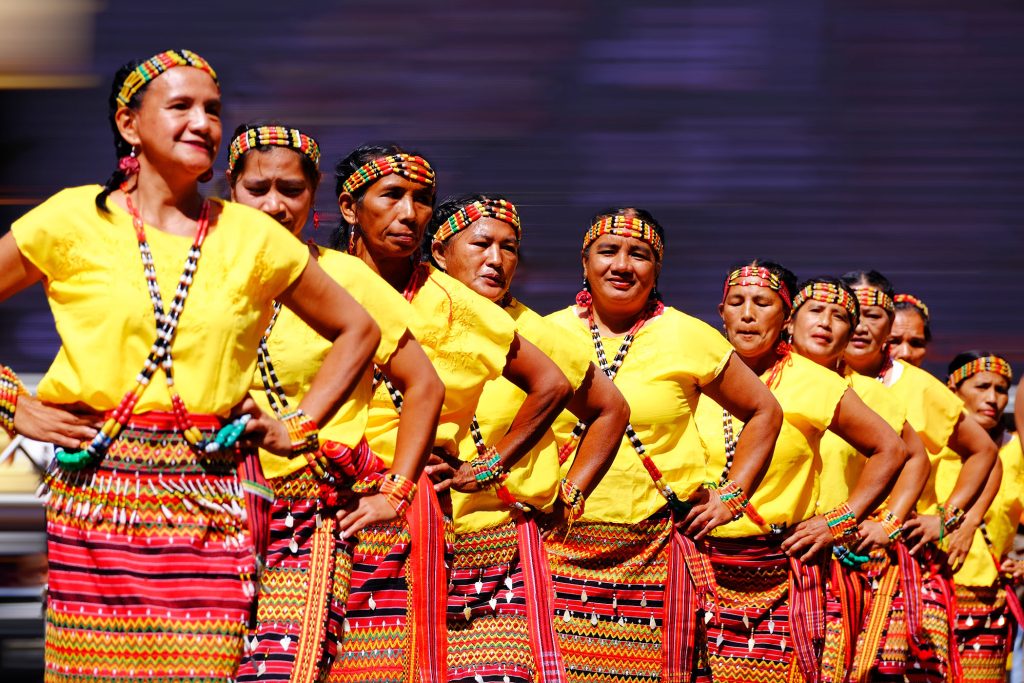
The Festival of Festivals 2026 combines the vibrant traditions of the Cordillera region's six provinces and two cities into one grand celebration. From vibrant ethnic dances to traditional music and rituals, the event celebrates the unity, heritage, and identity of Abra, Apayao, Benguet, Ifugao, Kalinga, Mountain Province, Baguio City and Tabuk City.** Photo by neimless_skills
More than 200 participants from across the Cordillera region and Indigenous Peoples (IPs) residing in Baguio City gathered on October 13, 2026 for a regional conference calling for genuine autonomy anchored on self-determination and community participation.
Held at the Grand Olive Ballroom of Venus Parkview Hotel at Kisad Road, the conference brought together delegates from the Cordillera provinces, IP rights advocates, organizations, and local media to discuss regional self-rule, local legislation, and community responses to the proposed Cordillera Autonomous Region.
Organized by the Cordillera Peoples Alliance (CPA), Tongtongan ti Umili, and the Cordillera Women’s Education, Action, Research Center (CWEARC), the event was conducted in partnership with the Office of Councilor Jose Molintas, Indigenous Peoples Mandatory Representative (IPMR) Maximo Edwin Jr., and Vice Mayor Faustino Olowan, representing the Baguio City Council.
The conference sought to challenge mainstream legislative approaches to regional autonomy and advance a grassroots-led process that recognizes the Cordillera peoples’ right to self-determination.
In his opening message, Olowan emphasized the need to protect ancestral domains and natural resources in pursuing regional autonomy. He said the position paper to be developed during the conference would be presented to city leaders and brought to Congress.
Olowan also expressed hope for an autonomy arrangement acceptable to the people of the Cordillera, citing the region’s previous experiences with failed plebiscites on autonomy.
The Cordillera has twice voted on proposals to establish an autonomous region. In the January 30, 1990 plebiscite, only Ifugao approved the first proposed Organic Act. In the March 7, 1998 plebiscite, the second proposal was rejected by all participating provinces and Baguio City except Apayao. Neither attempt resulted in the establishment of an autonomous regional government.
Olowan said a position paper to be developed during the conference would be presented to city leaders and Congress. He expressed hope that the process would help advance an autonomy proposal acceptable to the Cordillera people, emphasizing the protection of ancestral domains and natural resources.
CPA co-founder Joanna Cariño discussed genuine regional autonomy as an expression of self-determination in the Cordillera.
CPA chairperson Windel Bolinget called for the rejection of House Bill No. 6981 which seeks to establish the Cordillera Autonomous Region, describing it as “bogus autonomy” that would preserve the status quo rather than guarantee genuine self-determination for Indigenous Peoples.
Bolinget questioned provisions that could exclude provinces and cities voting against autonomy from the proposed Cordillera Autonomous Region, warning that this could divide the region and weaken its collective identity.
He also raised concerns over the proposed regional governor’s powers, the protection of ancestral lands and natural resources, and safeguards against human rights violations and militarization. He said establishing a regional government alone would not guarantee meaningful self-rule and called for broader political and economic changes that would allow communities to control their resources and determine their development priorities.
He urged Cordillerans to oppose House Bill No. 6981 and vote against it should a plebiscite take place in 2027.
Meanwhile, Councilor and human rights lawyer Jose Molintas questioned whether House Bill No. 6981 adequately protects Indigenous Peoples’ rights to ancestral lands and natural resources.
Molintas raised concerns over difficulties in ancestral land titling, the need for genuine free, prior, and informed consent (FPIC) before projects affecting Indigenous communities proceed, and the use of Ancestral Domain Sustainable Development and Protection Plans (ADSDPPs) to guide development priorities.
He also called for meaningful representation of all sectors in regional decision-making, citing a parliamentary system as a possible alternative to a presidential system. He said genuine autonomy must go beyond establishing a regional government and ensure that decisions on ancestral lands and resources respond to the needs of Cordilleran communities.
IPMR Edwin presented the perspective of Indigenous Peoples in Baguio City, while House Deputy Minority Leader and ACT Teachers Party-list Representative Antonio Tinio was scheduled to deliver an afternoon response address.
The conference was facilitated by Jeoff Larua of Tongtongan ti Umili and CWEARC executive director Abigail Anongos.
The gathering provided a venue for participants to examine legislative approaches to regional autonomy and discuss community positions on the region’s pursuit of self-determination.**Jordan G. Habbiling