ACT Teachers Party-list Representative and House Deputy Minority Leader Antonio Tinio and Cordillera Peoples Alliance (CPA) Chairperson Windel Bolinget raised concerns over House Bill No. 6981 which seeks to establish the Cordillera Autonomous Region during a regional conference on genuine autonomy at Venus Parkview Hotel on October 13, 2026.
Tinio questioned whether the proposed measure would establish genuine regional autonomy or primarily devolve government functions to a regional administration. He cited the Bangsamoro Autonomous Region in Muslim Mindanao (BARMM) as a point of comparison, particularly its regional powers, judicial institutions, and policing mechanisms.
He also questioned the proposed funding arrangements, warning that the regional government could become dependent on revenues from mining, hydroelectric power, renewable energy, and economic zone projects to finance its operations.
On the ratification process, Tinio raised concerns over the provision allowing the autonomous region to be established if at least two provinces or cities vote in favor. He questioned how this arrangement could affect communities that oppose the proposal.
Tinio further expressed concern that the measure could benefit political dynasties and weaken Cordillera identity. He also questioned its prospects for passage, saying he was not aware of the bill being included among the national government’s priority legislative measures.
Meanwhile, Bolinget called for the rejection of House Bill No. 6981, describing it as “bogus autonomy” that would preserve the status quo rather than guarantee genuine self-determination for Indigenous Peoples (IPs).
He questioned provisions that would allow only provinces and cities voting in favor of autonomy to join the proposed Cordillera Autonomous Region. According to his reading of the bill, areas voting against the proposal would be placed under adjacent administrative regions through an executive order.
Bolinget warned that the arrangement could divide Abra, Apayao, Benguet, Ifugao, Kalinga, and Mountain Province, as well as the cities of Baguio and Tabuk. He said genuine autonomy should recognize the Cordillera’s collective identity and aspirations rather than make the region’s territorial composition dependent on separate plebiscite results.
He also questioned the bill’s definition of Cordilleran identity which he said relies too heavily on residency and fails to adequately recognize the region’s Indigenous character. He maintained that Indigenous communities have an inherent right to self-determination and to protect their ancestral lands, territories, resources, and culture.
The CPA chairperson further raised concerns over the powers proposed for the regional governor including authority over appointments and local government units, participation in resource development agreements, and the ability to request national military assistance during regional emergencies. He warned that these provisions could concentrate power in the regional government without giving communities greater control over decisions affecting them.
Bolinget also questioned whether the proposed autonomous government would have sufficient authority over natural resources. He cited provisions on mining, energy projects, and other resource development activities, arguing that continued reliance on national laws and policies could limit the region’s ability to pursue development based on community needs and decisions.
Among the measures he criticized were the Mining Act and Presidential Decree No. 705, or the Revised Forestry Code, which he considers detrimental to Indigenous land rights. He also raised concerns over what he described as inadequate safeguards against human rights violations, militarization, and the repression of community protests, as well as the bill’s funding provisions and the establishment of additional regional offices and institutions.
Comparing the proposal with the former Autonomous Region in Muslim Mindanao, Bolinget argued that creating an autonomous regional government alone does not guarantee improved conditions or meaningful self-rule. He said genuine autonomy requires broader political and economic changes that allow communities to control their resources and determine their development priorities.
He urged Cordillerans to oppose House Bill No. 6981 and vote against it should a plebiscite take place in 2027. He also invoked the region’s previous autonomy plebiscites in 1990 and 1998, neither of which resulted in the establishment of an autonomous Cordillera regional government.
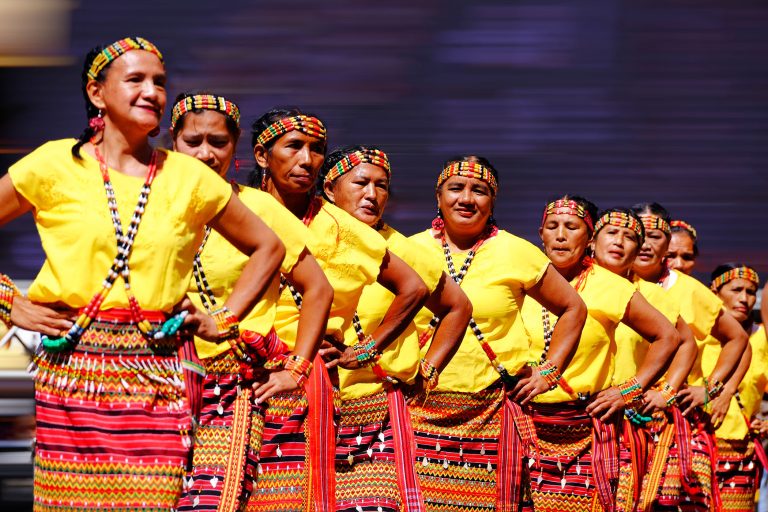
The conference gathered more than 200 participants, including delegates from Cordillera provinces, IPs residing in Baguio City, Indigenous Peoples’ rights organizations, and local media. It was organized by the CPA, Tongtongan ti Umili, and the Cordillera Women’s Education, Action, Research Center (CWEARC), with local officials and representatives taking part.
The gathering provided a venue for discussions on the proposed autonomy measure, with participants examining its implications for regional governance, Indigenous rights, resource control, and the Cordillera people’s pursuit of self-determination. **Jordan G. Habbiling & Allan Roy Canilang (PIO Intern)